
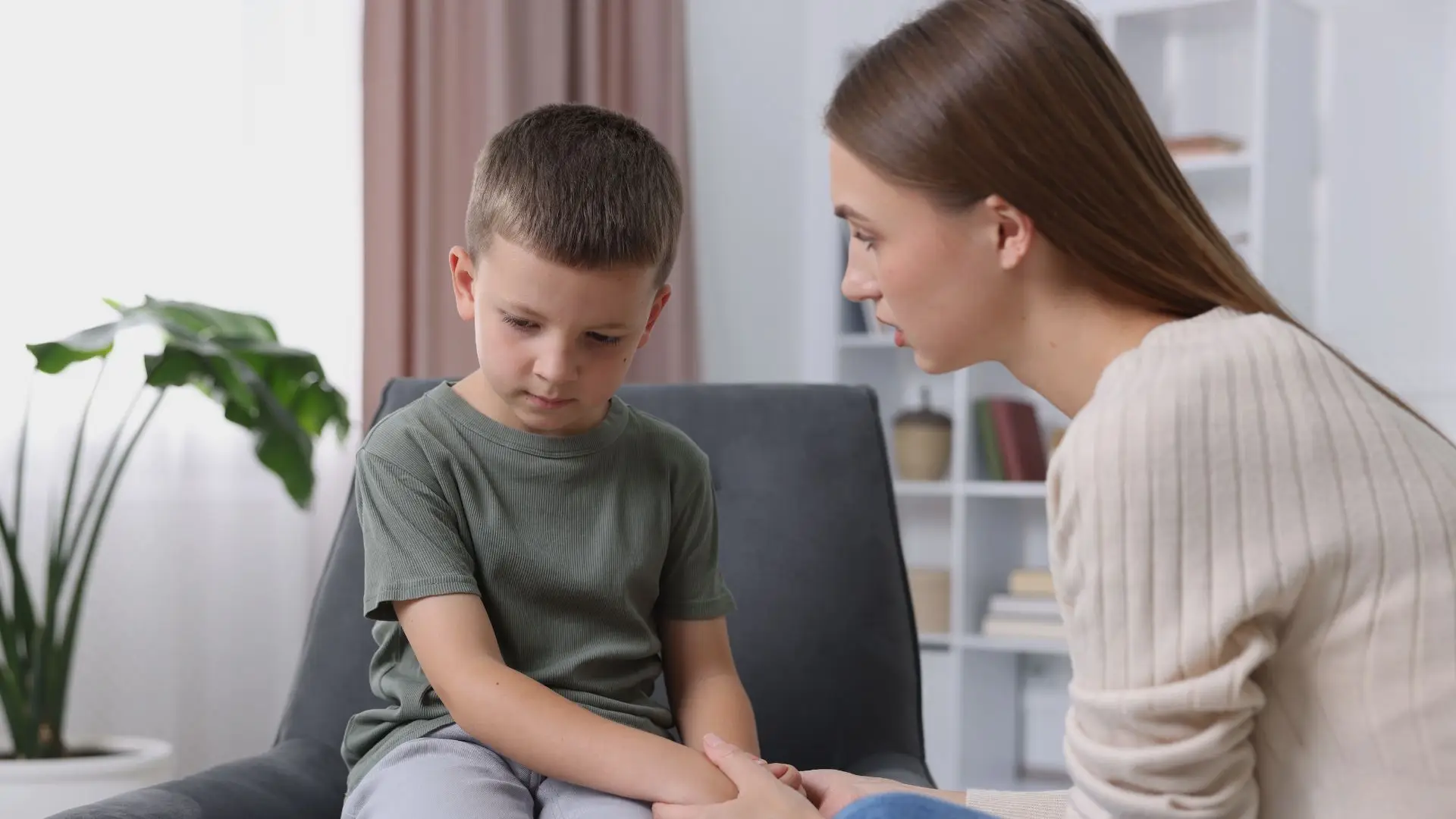
Creating steadiness inside emotionally charged moments
Calm does not mean nothing is happening internally. It means you are able to stay connected to yourself while something is happening internally.
You’ll receive a short reflection to help you get more out of the session.
Why These Moments Feel So Hard
Most parents have experienced moments where a child’s emotions begin rising quickly:
Tightness.
Urgency.
Frustration.
Pressure.
A strong pull to:
Because staying calm in emotionally charged moments is not simply about self-control.
There is usually something deeper happening underneath.
Many parents are trying to learn how to stay calm when a child is upset, overwhelmed, or emotionally escalating in real time.
But calm parenting during big emotions is rarely just about techniques.
Often, it begins with understanding what is happening internally in both the child and the parent.
- yelling
- crying
- shutting down
- arguing
- refusing
- escalating emotionally
Tightness.
Urgency.
Frustration.
Pressure.
A strong pull to:
- make the behavior stop
- regain control quickly
- correct the situation immediately
- react from the intensity of the moment itself
- “Why did I react like that?”
- “Why is it so hard to stay calm?”
- “How do I handle these moments differently?”
Because staying calm in emotionally charged moments is not simply about self-control.
There is usually something deeper happening underneath.
Many parents are trying to learn how to stay calm when a child is upset, overwhelmed, or emotionally escalating in real time.
But calm parenting during big emotions is rarely just about techniques.
Often, it begins with understanding what is happening internally in both the child and the parent.
Calm Is Not the Absence of Emotion
Many people imagine calm as:
Especially in parenting.
Calm does not mean:
Because parents are human too.
Children’s emotions affect parents emotionally.
Especially when:
That is part of being human.
Learning how to stay grounded as a parent becomes especially important during emotionally intense moments.
Because emotional awareness in parenting helps parents recognize rising tension before reactions fully take over.
- never feeling frustrated
- never feeling overwhelmed
- never getting emotionally activated
Especially in parenting.
Calm does not mean:
nothing is happening internally.It means:
you are able to stay connected to yourself while something is happening internally.That is very different.
Because parents are human too.
Children’s emotions affect parents emotionally.
Especially when:
- tension escalates quickly
- voices become disrespectful
- conflict feels unpredictable
- emotions begin filling the room
That is part of being human.
Learning how to stay grounded as a parent becomes especially important during emotionally intense moments.
Because emotional awareness in parenting helps parents recognize rising tension before reactions fully take over.
What Often Happens in Escalating Moments
When children become emotionally overwhelmed, parents often begin reacting automatically.
Not because they are bad parents.
But because:
Children are still developing child emotional regulation over time, which means parents often become the emotional anchor inside difficult moments first.
Not because they are bad parents.
But because:
their own nervous system is responding to emotional intensity in real time.Sometimes the reaction looks like:
- becoming louder
- becoming more forceful
- shutting down emotionally
- lecturing
- threatening consequences quickly
- reacting before fully thinking
- fear
- helplessness
- overwhelm
- pressure
- emotional exhaustion
- fear of losing connection or control
the parent’s internal state begins shaping the conversation long before the words themselves do.This is why emotional regulation for parents matters so much.
Children are still developing child emotional regulation over time, which means parents often become the emotional anchor inside difficult moments first.
A Small Moment Most People Miss
A child suddenly melts down over something that seems relatively small.
You can feel frustration rise almost immediately.
Part of you wants to say:
Not because either person intended harm.
But because:
But awareness helps parents begin noticing what is happening earlier inside themselves too.
You can feel frustration rise almost immediately.
Part of you wants to say:
“This is not that big of a deal.”But underneath your frustration may also be:
- stress from the day
- exhaustion
- feeling emotionally overloaded yourself
- fear that the behavior will continue escalating
- pressure to “handle this correctly”
your nervous system begins reacting to the child’s nervous system.That is often when escalation accelerates.
Not because either person intended harm.
But because:
two emotionally activated people are now trying to regulate inside the same moment.Parenting through emotional overwhelm can feel exhausting, especially when emotions escalate quickly and repeatedly.
But awareness helps parents begin noticing what is happening earlier inside themselves too.
Why Staying Calm Helps So Much
Children often borrow emotional regulation from adults before they can consistently create it internally themselves.
That means:
But because emotional safety is often communicated nonverbally before words are even processed.
A grounded parent helps create:
That means:
- your steadiness matters
- your emotional presence matters
- your nervous system matters
But because emotional safety is often communicated nonverbally before words are even processed.
A grounded parent helps create:
- safety
- predictability
- steadiness
- space for emotional recovery
Staying Calm Is Not the Same as Being Passive
Remaining calm does not mean:
Because children often stop hearing the words once emotional threat becomes too high.
- allowing harmful behavior
- removing boundaries
- never correcting behavior
- becoming emotionally detached
- structure
- accountability
- guidance
- limits
Because children often stop hearing the words once emotional threat becomes too high.
Another Real Moment
A teenager responds sharply:
You notice:
You respond more slowly.
More intentionally.
And the conversation doesn’t spiral the same way it might have before.
Not because the moment suddenly became easy.
But because:
“You never understand anything.”Immediately, you feel:
- hurt
- anger
- defensiveness
- the urge to react
“Don’t talk to me like that.”But instead, you pause long enough to notice what is happening inside yourself first.
You notice:
- the tightness
- the urgency
- the emotional pull to escalate
You respond more slowly.
More intentionally.
And the conversation doesn’t spiral the same way it might have before.
Not because the moment suddenly became easy.
But because:
awareness created a small space inside the reaction.That space matters.
Awareness Changes the Entire Moment
Most emotional reactions happen quickly.
Often before people fully realize what is happening internally.
That is why awareness matters so much.
Awareness helps parents begin noticing:
But it does create:
Often before people fully realize what is happening internally.
That is why awareness matters so much.
Awareness helps parents begin noticing:
- emotional activation earlier
- rising tension sooner
- internal pressure before escalation fully takes over
more than one response becomes possible.That does not mean parents suddenly become perfectly calm.
But it does create:
- more choice
- more steadiness
- more intentionality
- more space for connection
What Helps Parents Stay More Grounded
Parents often stay more grounded when they:
Staying calm during child meltdowns does not mean parents never feel emotionally activated.
It means they are gradually learning how to remain more steady inside emotionally charged moments.
- slow down before reacting
- notice physical tension earlier
- focus on steadiness before correction
- remember that emotions are temporary
- understand that behavior often communicates something underneath
- avoid trying to “win” the moment emotionally
“How do I stop my child’s emotions?”But:
“How do I remain grounded enough to help create safety inside this moment?”That changes everything.
Staying calm during child meltdowns does not mean parents never feel emotionally activated.
It means they are gradually learning how to remain more steady inside emotionally charged moments.
Emotional Regulation Is Learned Through Experience
Children gradually learn emotional regulation through repeated experiences of:
Consistent enough experiences.
And parents learn this gradually too.
No one responds perfectly every time.
The goal is not perfection.
The goal is increasing awareness and steadiness over time.
- emotional safety
- repair
- connection during difficulty
- steady adults
- feeling understood without shame
Consistent enough experiences.
And parents learn this gradually too.
No one responds perfectly every time.
The goal is not perfection.
The goal is increasing awareness and steadiness over time.
What This Looks Like Long-Term
When parents begin responding with greater steadiness:
But because:
- conversations become safer
- escalation slows more quickly
- children begin feeling less emotionally alone
- repair happens more easily
- emotional resilience begins growing over time
But because:
children slowly learn they can move through difficult emotions without losing connection.That becomes part of how emotional maturity develops.
Where This Begins
Most parents are already trying to navigate these moments.
You can feel it in questions like:
And often, the answer begins before the words themselves.
It begins with:
You can feel it in questions like:
- “How do I stop escalating too?”
- “How do I stay grounded under pressure?”
- “How do I help my child without losing myself emotionally?”
And often, the answer begins before the words themselves.
It begins with:
- awareness
- noticing what is happening internally
- recognizing emotional activation earlier
- creating space before reacting
Join the Unlock™ Workshop
In the Unlock™ Workshop, we walk through:
- why reactions happen in real moments
- what is happening internally before conversations escalate
- how awareness creates space for different responses
- how steadiness and connection can grow together
You’ll receive a short reflection to help you get more out of the session.
Continue Exploring
If this resonated, these related pieces may help you keep going: