
Why Knowing What To Do Is Often Not Enough
Most people believe change begins with knowing.
If we know how to communicate better, we'll communicate better.
If we know how to stay calm, we'll stay calm.
If we know how to be more patient, we'll be more patient.
If we know how to lead, parent, or build stronger relationships, we'll naturally do those things.
Yet many of us have experienced a different reality.
We know.
And still we struggle.
We know we should pause before reacting.
Yet the reaction comes.
We know we should listen more carefully.
Yet we interrupt.
We know we should have the conversation.
Yet we avoid it.
The problem is not always information.
Often the challenge is that we are trying to change at the level of behavior while remaining unaware of what is shaping the behavior.
Human flourishing begins when awareness creates space.
Space to see more clearly.
Space to understand more deeply.
Space to choose more intentionally.
Most Growth Efforts Begin At The Wrong Level
When people want to change, they often focus on what they do.
The visible behavior.
The reaction.
The habit.
The outcome.
Yet behavior is often the final expression of something deeper.
A reaction may be connected to fear.
A conflict may be connected to belonging.
A leadership challenge may be connected to identity.
A parenting struggle may be connected to patterns we learned long ago.
What we do matters.
But what we do is rarely the whole story.
This is why Flourish First begins with awareness.
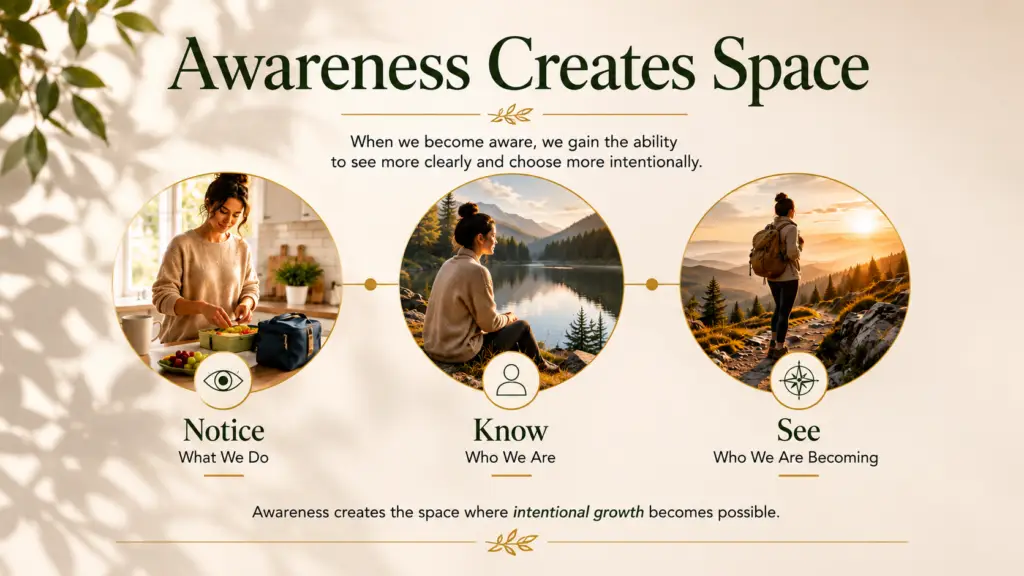
Awareness Helps Us Notice What We Do
Many people spend years trying to improve behaviors without first noticing them.
We focus on changing reactions, habits, and outcomes. Yet what remains unnoticed often remains unchanged.
Awareness begins when we slow down long enough to see what is happening before we automatically respond.
This is why flourishing begins with awareness.
Notice
The first invitation is to notice.
Notice means paying attention to our thoughts, emotions, behaviors, and experiences without immediately judging or fixing them. Awareness begins when we become willing to see what is actually happening.
Recognize
As awareness grows, patterns begin to emerge.
Recognition helps us connect individual moments into a larger story. We begin to see recurring reactions, beliefs, habits, and emotional patterns that influence how we live and relate to others.
Choose
Awareness creates the possibility of choice.
Instead of reacting automatically, we gain the ability to respond more intentionally. Choice allows us to act in ways that are increasingly aligned with who we want to be.
How They Work Together
Notice, Recognize, and Choose form a natural progression.
We notice what is happening.
We recognize the patterns shaping what is happening.
We choose how we want to respond moving forward.
Together they create the space between reaction and response—the space where intentional growth becomes possible.
Awareness Helps Us Notice What We Do
Many people spend years trying to improve behaviors without first noticing them.
We focus on changing reactions, habits, and outcomes. Yet what remains unnoticed often remains unchanged.
Awareness begins when we slow down long enough to see what is happening before we automatically respond.
This is why flourishing begins with awareness.
Notice
The first invitation is to notice.
Notice means paying attention to our thoughts, emotions, behaviors, and experiences without immediately judging or fixing them. Awareness begins when we become willing to see what is actually happening.
Recognize
As awareness grows, patterns begin to emerge.
Recognition helps us connect individual moments into a larger story. We begin to see recurring reactions, beliefs, habits, and emotional patterns that influence how we live and relate to others.
Choose
Awareness creates the possibility of choice.
Instead of reacting automatically, we gain the ability to respond more intentionally. Choice allows us to act in ways that are increasingly aligned with who we want to be.
How They Work Together
Notice, Recognize, and Choose form a natural progression.
We notice what is happening.
We recognize the patterns shaping what is happening.
We choose how we want to respond moving forward.
Together they create the space between reaction and response—the space where intentional growth becomes possible.
Many people spend years trying to improve behaviors without first noticing them.
We focus on changing reactions, habits, and outcomes. Yet what remains unnoticed often remains unchanged.
Awareness begins when we slow down long enough to see what is happening before we automatically respond.
This is why flourishing begins with awareness.
Notice
The first invitation is to notice.
Notice means paying attention to our thoughts, emotions, behaviors, and experiences without immediately judging or fixing them. Awareness begins when we become willing to see what is actually happening.
Recognize
As awareness grows, patterns begin to emerge.
Recognition helps us connect individual moments into a larger story. We begin to see recurring reactions, beliefs, habits, and emotional patterns that influence how we live and relate to others.
Choose
Awareness creates the possibility of choice.
Instead of reacting automatically, we gain the ability to respond more intentionally. Choice allows us to act in ways that are increasingly aligned with who we want to be.
How They Work Together
Notice, Recognize, and Choose form a natural progression.
We notice what is happening.
We recognize the patterns shaping what is happening.
We choose how we want to respond moving forward.
Together they create the space between reaction and response—the space where intentional growth becomes possible.
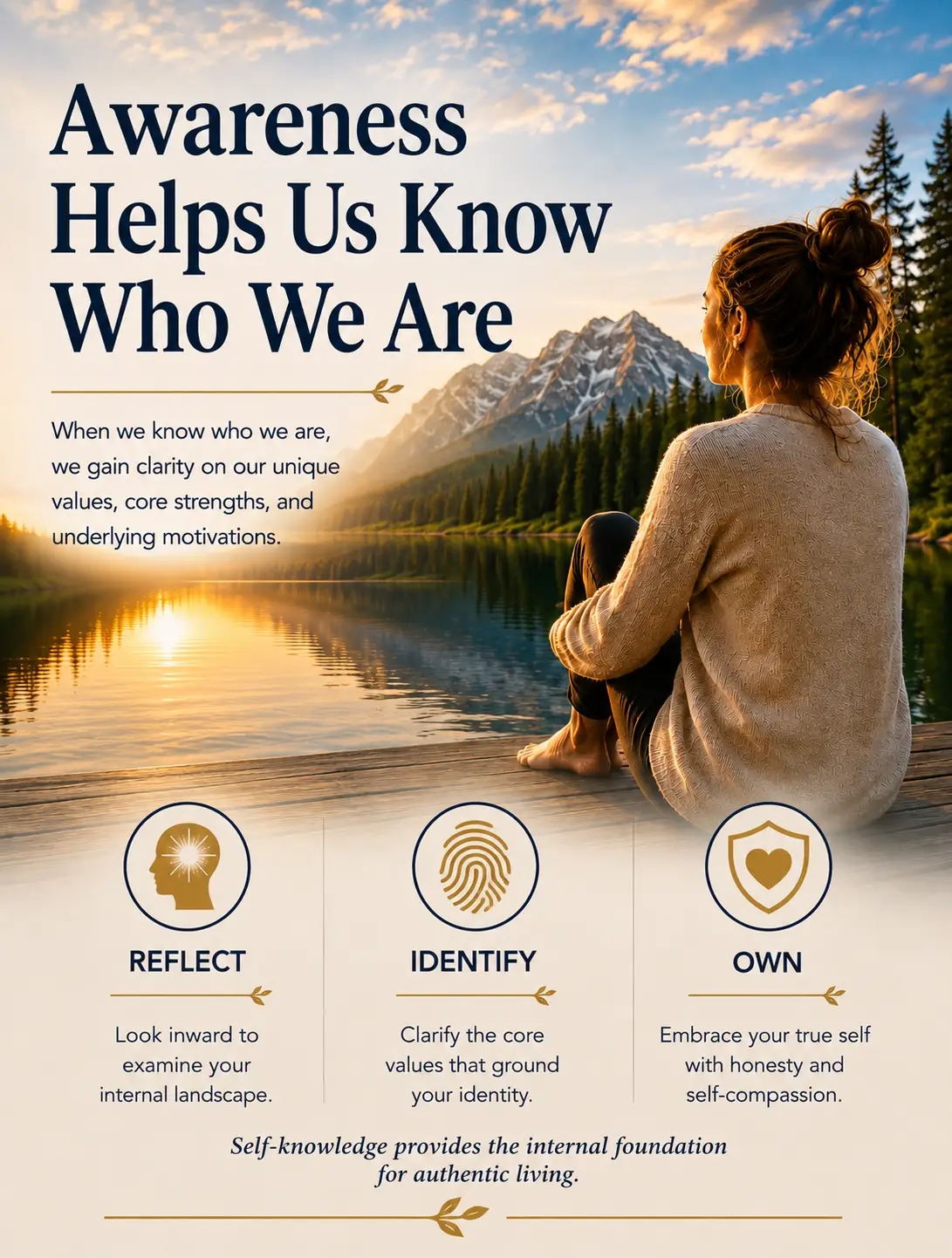
Awareness Helps Us Know Who We Are
Knowing who we are is different from simply knowing about ourselves.
Many people move through life carrying beliefs, habits, responsibilities, and expectations without ever pausing to ask where those patterns came from or whether they still reflect who they truly are. We become busy managing life while remaining disconnected from the deeper truths that shape how we live it.
Awareness invites us to look beneath the surface.
As we grow in awareness, we begin to understand not only what we do, but who we are. We become more conscious of the values, experiences, strengths, fears, and motivations that influence our choices. This kind of self-knowledge creates a foundation for greater clarity, authenticity, and intentional living.
Reflect
Reflection is the practice of turning inward with curiosity rather than judgment.
In a world that constantly pulls our attention outward, reflection creates space to notice what is happening within. It allows us to observe our thoughts, emotions, beliefs, and experiences more clearly. Reflection is not about becoming self-focused; it is about becoming self-aware. When we take time to understand our inner landscape, we begin to recognize the influences that shape our decisions and relationships.
Identify
As awareness deepens, we begin to identify what truly matters.
Beneath every decision are values, needs, priorities, and beliefs that guide the way we move through life. Sometimes those influences are clear. Often they operate quietly in the background. Identifying them helps us distinguish between what we have inherited from others and what genuinely reflects who we are. Clarity grows when we can name the principles and convictions that ground our identity.
Own
Self-knowledge becomes meaningful when we are willing to own what we discover.
Owning who we are does not mean believing we have everything figured out. It means embracing ourselves with honesty and self-compassion. It means acknowledging both strengths and limitations without becoming defined by either. When we stop fighting reality, hiding from it, or pretending to be someone else, we create the conditions for authentic growth. Ownership allows us to move forward from truth rather than from performance.
Bringing It Together
Reflect, Identify, and Own work together to deepen our understanding of ourselves.
Reflection helps us see more clearly. Identification helps us understand what we see. Ownership helps us embrace it with courage and compassion. Together, these practices transform awareness into self-knowledge.
This is why Awareness Helps Us Know Who We Are.
The more clearly we understand ourselves, the more intentionally we can live. We become less driven by unconscious patterns and more guided by values, purpose, and truth. And as we grow in self-knowledge, we become better prepared to live, love, lead, and flourish in ways that are aligned with who we truly are becoming.
Awareness Helps Us Know Who We Are
Knowing who we are is different from simply knowing about ourselves.
Many people move through life carrying beliefs, habits, responsibilities, and expectations without ever pausing to ask where those patterns came from or whether they still reflect who they truly are. We become busy managing life while remaining disconnected from the deeper truths that shape how we live it.
Awareness invites us to look beneath the surface.
As we grow in awareness, we begin to understand not only what we do, but who we are. We become more conscious of the values, experiences, strengths, fears, and motivations that influence our choices. This kind of self-knowledge creates a foundation for greater clarity, authenticity, and intentional living.
Reflect
Reflection is the practice of turning inward with curiosity rather than judgment.
In a world that constantly pulls our attention outward, reflection creates space to notice what is happening within. It allows us to observe our thoughts, emotions, beliefs, and experiences more clearly. Reflection is not about becoming self-focused; it is about becoming self-aware. When we take time to understand our inner landscape, we begin to recognize the influences that shape our decisions and relationships.
Identify
As awareness deepens, we begin to identify what truly matters.
Beneath every decision are values, needs, priorities, and beliefs that guide the way we move through life. Sometimes those influences are clear. Often they operate quietly in the background. Identifying them helps us distinguish between what we have inherited from others and what genuinely reflects who we are. Clarity grows when we can name the principles and convictions that ground our identity.
Own
Self-knowledge becomes meaningful when we are willing to own what we discover.
Owning who we are does not mean believing we have everything figured out. It means embracing ourselves with honesty and self-compassion. It means acknowledging both strengths and limitations without becoming defined by either. When we stop fighting reality, hiding from it, or pretending to be someone else, we create the conditions for authentic growth. Ownership allows us to move forward from truth rather than from performance.
Bringing It Together
Reflect, Identify, and Own work together to deepen our understanding of ourselves.
Reflection helps us see more clearly. Identification helps us understand what we see. Ownership helps us embrace it with courage and compassion. Together, these practices transform awareness into self-knowledge.
This is why Awareness Helps Us Know Who We Are.
The more clearly we understand ourselves, the more intentionally we can live. We become less driven by unconscious patterns and more guided by values, purpose, and truth. And as we grow in self-knowledge, we become better prepared to live, love, lead, and flourish in ways that are aligned with who we truly are becoming.
Knowing who we are is different from simply knowing about ourselves.
Many people move through life carrying beliefs, habits, responsibilities, and expectations without ever pausing to ask where those patterns came from or whether they still reflect who they truly are. We become busy managing life while remaining disconnected from the deeper truths that shape how we live it.
Awareness invites us to look beneath the surface.
As we grow in awareness, we begin to understand not only what we do, but who we are. We become more conscious of the values, experiences, strengths, fears, and motivations that influence our choices. This kind of self-knowledge creates a foundation for greater clarity, authenticity, and intentional living.
Reflect
Reflection is the practice of turning inward with curiosity rather than judgment.
In a world that constantly pulls our attention outward, reflection creates space to notice what is happening within. It allows us to observe our thoughts, emotions, beliefs, and experiences more clearly. Reflection is not about becoming self-focused; it is about becoming self-aware. When we take time to understand our inner landscape, we begin to recognize the influences that shape our decisions and relationships.
Identify
As awareness deepens, we begin to identify what truly matters.
Beneath every decision are values, needs, priorities, and beliefs that guide the way we move through life. Sometimes those influences are clear. Often they operate quietly in the background. Identifying them helps us distinguish between what we have inherited from others and what genuinely reflects who we are. Clarity grows when we can name the principles and convictions that ground our identity.
Own
Self-knowledge becomes meaningful when we are willing to own what we discover.
Owning who we are does not mean believing we have everything figured out. It means embracing ourselves with honesty and self-compassion. It means acknowledging both strengths and limitations without becoming defined by either. When we stop fighting reality, hiding from it, or pretending to be someone else, we create the conditions for authentic growth. Ownership allows us to move forward from truth rather than from performance.
Bringing It Together
Reflect, Identify, and Own work together to deepen our understanding of ourselves.
Reflection helps us see more clearly. Identification helps us understand what we see. Ownership helps us embrace it with courage and compassion. Together, these practices transform awareness into self-knowledge.
This is why Awareness Helps Us Know Who We Are.
The more clearly we understand ourselves, the more intentionally we can live. We become less driven by unconscious patterns and more guided by values, purpose, and truth. And as we grow in self-knowledge, we become better prepared to live, love, lead, and flourish in ways that are aligned with who we truly are becoming.
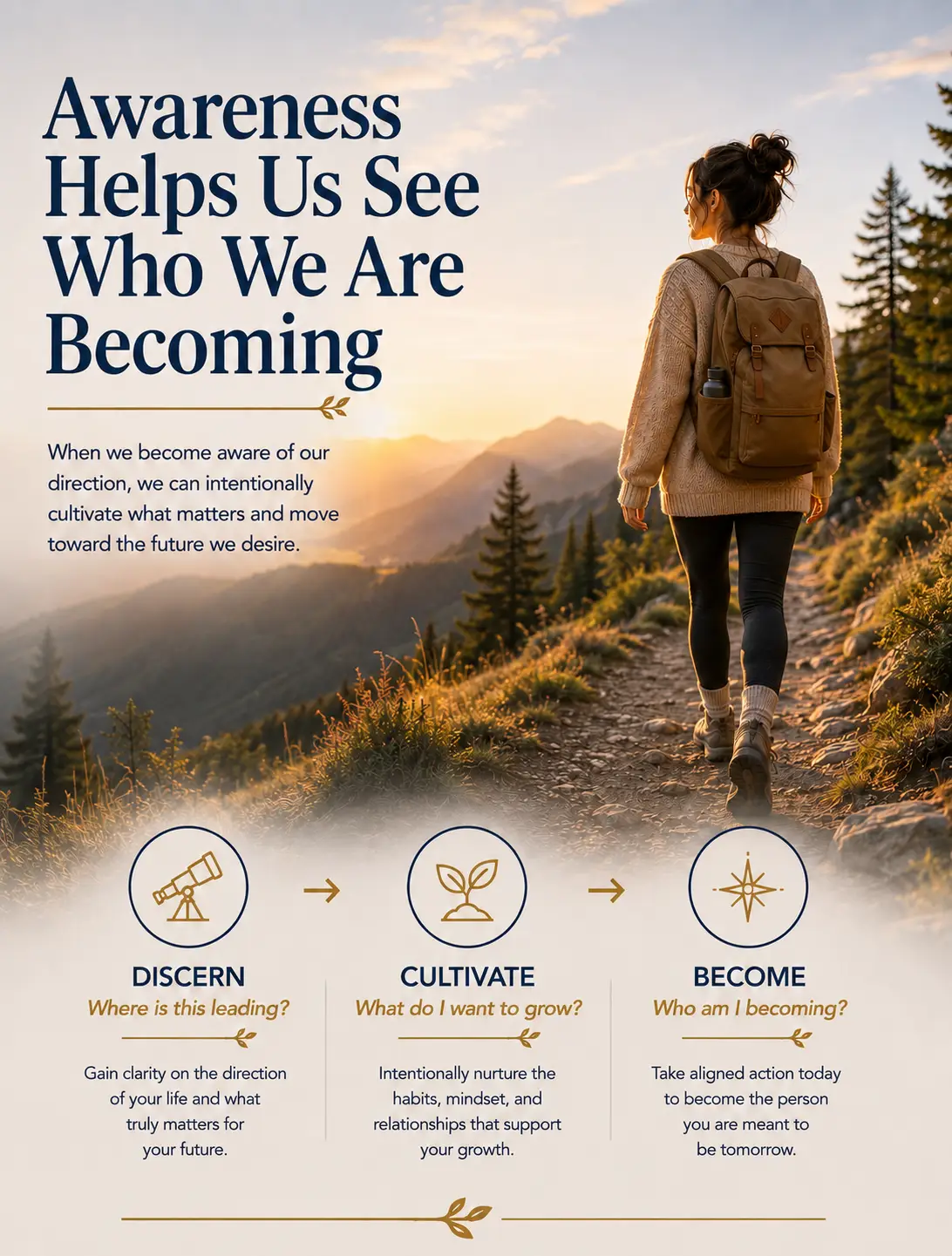
Awareness Helps Us See Who We Are Becoming
Awareness is not only about understanding where we are today. It is also about becoming conscious of the direction we are moving.
Every choice, habit, relationship, and belief shapes the person we are becoming. Whether we realize it or not, our lives are always moving toward something. Awareness helps us step out of autopilot long enough to notice that direction and decide whether it reflects the future we truly desire.
Many people spend years focused on correcting past mistakes or managing present challenges. While both matter, growth becomes more meaningful when we also develop a vision for who we want to become. Awareness expands our perspective beyond current circumstances and invites us to consider the possibilities ahead.
Envision
Envision is the ability to see beyond who you are today and imagine who you are capable of becoming.
This is not wishful thinking or fantasy. It is the practice of creating a clear picture of the person, relationships, character, and life you hope to cultivate. Vision provides direction. Without it, growth can feel reactive and disconnected. When we can see a compelling future, our choices begin to gain greater purpose and meaning.
Evaluate
Once we have a vision, awareness helps us evaluate whether our current path is leading toward it.
Evaluation is not about criticism or perfection. It is about honest assessment. It invites us to examine the patterns, habits, priorities, and relationships that are shaping our lives. Some may support the future we desire. Others may quietly move us away from it. Evaluation creates clarity by helping us recognize the gap between our intentions and our trajectory.
Direct
Awareness becomes transformational when it begins to influence direction.
Directing means intentionally guiding our attention, energy, and choices toward what matters most. Rather than allowing circumstances, distractions, or old patterns to determine our path, we become active participants in our own growth. Direction does not require certainty about every step ahead. It requires a willingness to move consistently toward what aligns with our values, vision, and purpose.
Bringing It Together
Envision, Evaluate, and Direct work together to transform awareness into intentional growth.
Envision helps us see where we want to go. Evaluate helps us understand where we are in relation to that future. Direct helps us move toward it with purpose and consistency. Together, they shift awareness from observation alone to conscious becoming.
This is why Awareness Helps Us See Who We Are Becoming.
The future is not shaped solely by what happens to us. It is shaped by the choices we make, the habits we cultivate, and the direction we intentionally pursue. Awareness allows us to see that future more clearly—and invites us to participate in creating it, one intentional choice at a time.
Awareness Helps Us See Who We Are Becoming
Awareness is not only about understanding where we are today. It is also about becoming conscious of the direction we are moving.
Every choice, habit, relationship, and belief shapes the person we are becoming. Whether we realize it or not, our lives are always moving toward something. Awareness helps us step out of autopilot long enough to notice that direction and decide whether it reflects the future we truly desire.
Many people spend years focused on correcting past mistakes or managing present challenges. While both matter, growth becomes more meaningful when we also develop a vision for who we want to become. Awareness expands our perspective beyond current circumstances and invites us to consider the possibilities ahead.
Envision
Envision is the ability to see beyond who you are today and imagine who you are capable of becoming.
This is not wishful thinking or fantasy. It is the practice of creating a clear picture of the person, relationships, character, and life you hope to cultivate. Vision provides direction. Without it, growth can feel reactive and disconnected. When we can see a compelling future, our choices begin to gain greater purpose and meaning.
Evaluate
Once we have a vision, awareness helps us evaluate whether our current path is leading toward it.
Evaluation is not about criticism or perfection. It is about honest assessment. It invites us to examine the patterns, habits, priorities, and relationships that are shaping our lives. Some may support the future we desire. Others may quietly move us away from it. Evaluation creates clarity by helping us recognize the gap between our intentions and our trajectory.
Direct
Awareness becomes transformational when it begins to influence direction.
Directing means intentionally guiding our attention, energy, and choices toward what matters most. Rather than allowing circumstances, distractions, or old patterns to determine our path, we become active participants in our own growth. Direction does not require certainty about every step ahead. It requires a willingness to move consistently toward what aligns with our values, vision, and purpose.
Bringing It Together
Envision, Evaluate, and Direct work together to transform awareness into intentional growth.
Envision helps us see where we want to go. Evaluate helps us understand where we are in relation to that future. Direct helps us move toward it with purpose and consistency. Together, they shift awareness from observation alone to conscious becoming.
This is why Awareness Helps Us See Who We Are Becoming.
The future is not shaped solely by what happens to us. It is shaped by the choices we make, the habits we cultivate, and the direction we intentionally pursue. Awareness allows us to see that future more clearly—and invites us to participate in creating it, one intentional choice at a time.
Awareness is not only about understanding where we are today. It is also about becoming conscious of the direction we are moving.
Every choice, habit, relationship, and belief shapes the person we are becoming. Whether we realize it or not, our lives are always moving toward something. Awareness helps us step out of autopilot long enough to notice that direction and decide whether it reflects the future we truly desire.
Many people spend years focused on correcting past mistakes or managing present challenges. While both matter, growth becomes more meaningful when we also develop a vision for who we want to become. Awareness expands our perspective beyond current circumstances and invites us to consider the possibilities ahead.
Envision
Envision is the ability to see beyond who you are today and imagine who you are capable of becoming.
This is not wishful thinking or fantasy. It is the practice of creating a clear picture of the person, relationships, character, and life you hope to cultivate. Vision provides direction. Without it, growth can feel reactive and disconnected. When we can see a compelling future, our choices begin to gain greater purpose and meaning.
Evaluate
Once we have a vision, awareness helps us evaluate whether our current path is leading toward it.
Evaluation is not about criticism or perfection. It is about honest assessment. It invites us to examine the patterns, habits, priorities, and relationships that are shaping our lives. Some may support the future we desire. Others may quietly move us away from it. Evaluation creates clarity by helping us recognize the gap between our intentions and our trajectory.
Direct
Awareness becomes transformational when it begins to influence direction.
Directing means intentionally guiding our attention, energy, and choices toward what matters most. Rather than allowing circumstances, distractions, or old patterns to determine our path, we become active participants in our own growth. Direction does not require certainty about every step ahead. It requires a willingness to move consistently toward what aligns with our values, vision, and purpose.
Bringing It Together
Envision, Evaluate, and Direct work together to transform awareness into intentional growth.
Envision helps us see where we want to go. Evaluate helps us understand where we are in relation to that future. Direct helps us move toward it with purpose and consistency. Together, they shift awareness from observation alone to conscious becoming.
This is why Awareness Helps Us See Who We Are Becoming.
The future is not shaped solely by what happens to us. It is shaped by the choices we make, the habits we cultivate, and the direction we intentionally pursue. Awareness allows us to see that future more clearly—and invites us to participate in creating it, one intentional choice at a time.
The Flourish First Insight
Most personal growth focuses on behavior.
Flourish First begins with awareness.
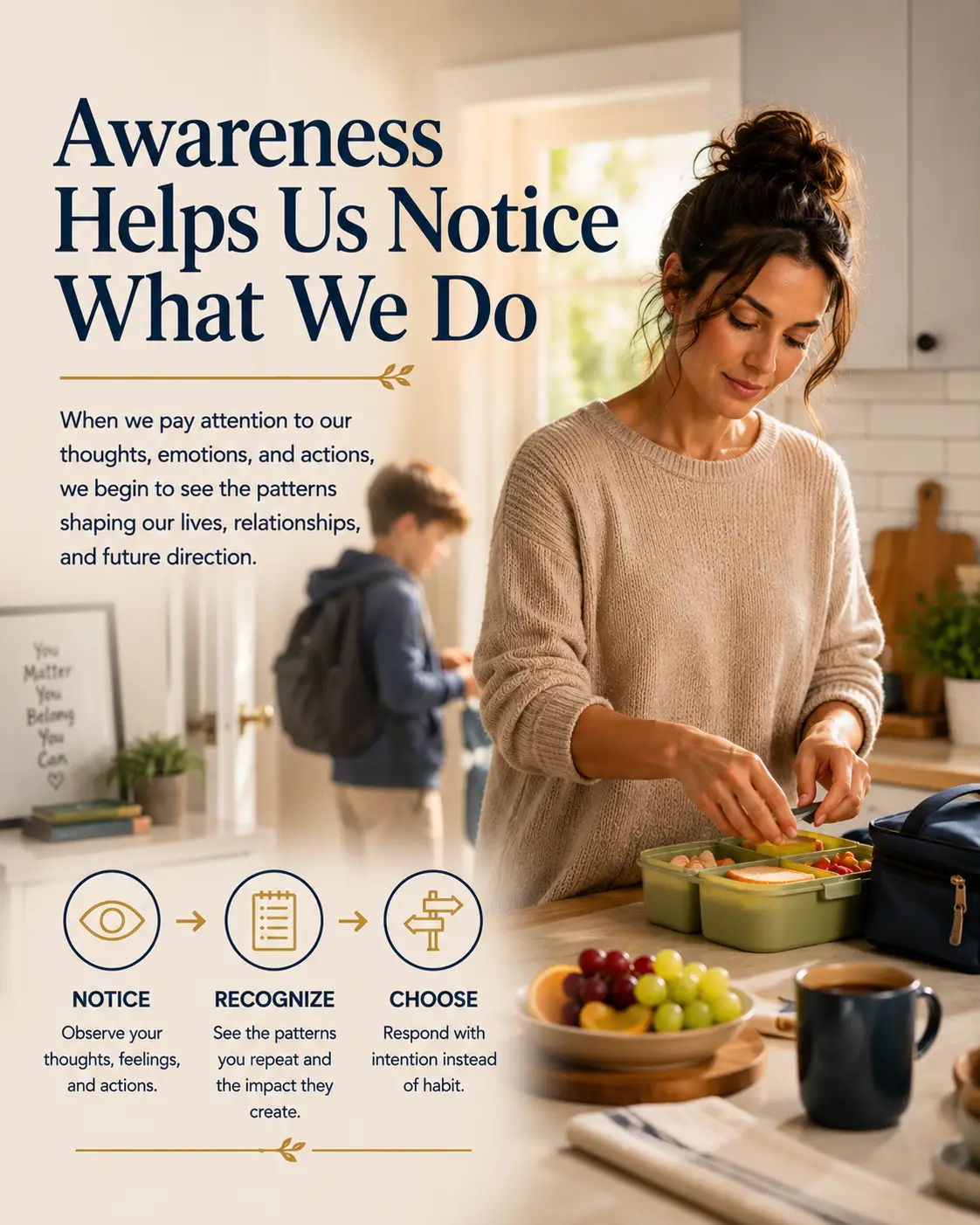
Because awareness creates space.
Space to notice what we do.
Space to know who we are.
Space to see who we are becoming.
And within that space, different choices become available.
Not because we become perfect.
Not because life becomes easy.
Because we begin to see more clearly.
And when we see more clearly, we can live, love, and lead more intentionally.
The Journey Of Human Flourishing
Human flourishing is not a destination.
It is an ongoing process of becoming.
A process of growing in awareness.
Strengthening relationships.
Creating belonging.
Leading intentionally.
And choosing, day by day, who we are becoming.
That journey begins with awareness.
Because awareness creates space.
Begin With Awareness
The goal is not perfection. The goal is seeing more clearly. When awareness creates space, different choices become available — and those choices shape how we live, love, and lead.