
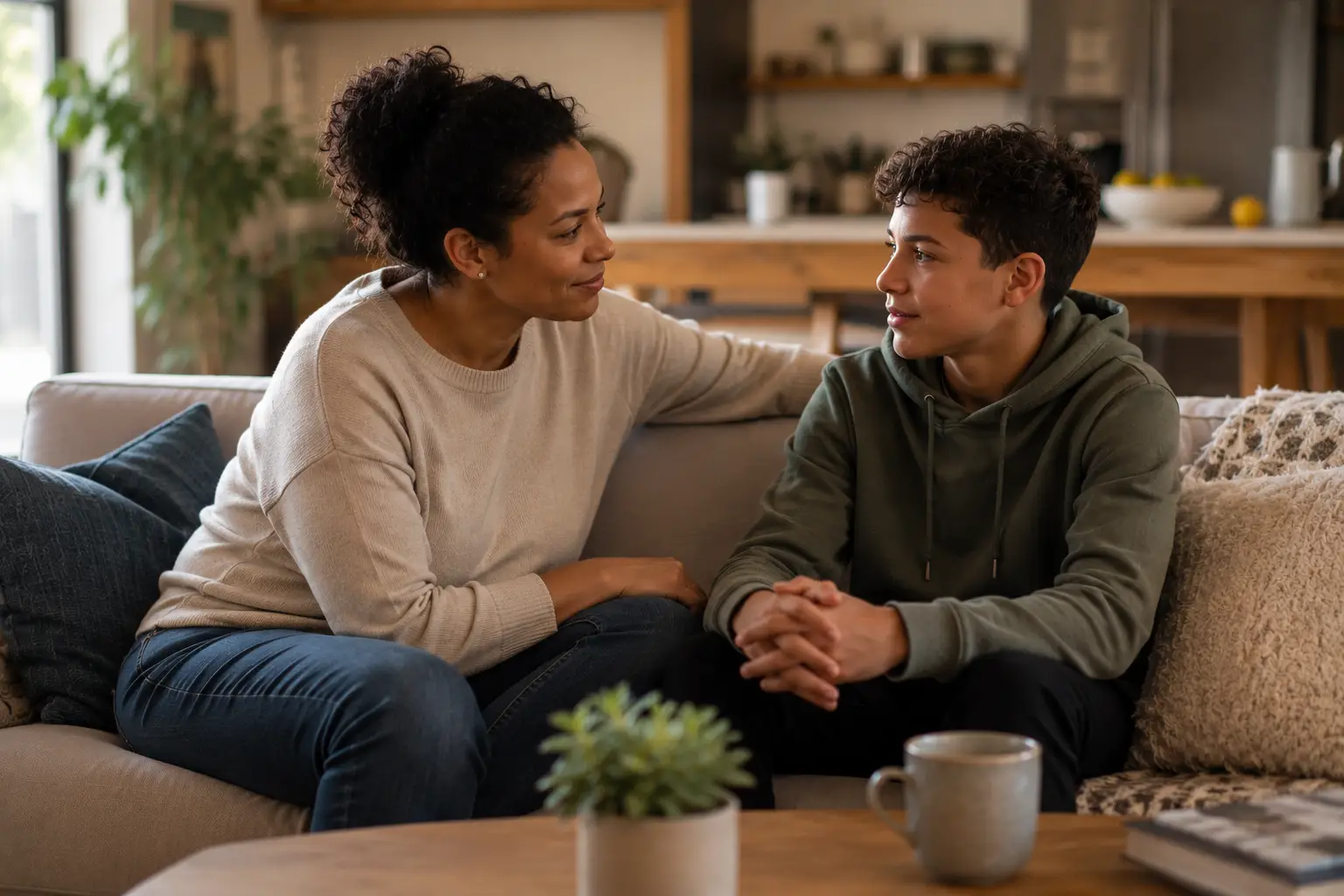
Helping children stand on their own—without feeling like they have to do life alone
Independence matters. But when it grows without connection, children can learn to look strong while carrying pressure alone.
You’ll receive a short reflection to help you get more out of the session.
Why Independence Alone Isn’t the Goal
Most parents want their child to become independent.
To be able to:
- make decisions
- take responsibility
- navigate life on their own
Can they function on their own?But:
Can they stay connected—to themselves and to others—as they do?Because independence without connection can quietly turn into isolation.
What Independence Often Gets Mistaken For
Independence is often misunderstood.
It’s not:
- doing everything alone
- not needing support
- pushing through without connection
- awareness of what’s happening internally
- the ability to ask for help when needed
- staying grounded in uncertainty
A Subtle Moment That Shapes This
A child is trying to do something on their own.
It’s not going smoothly.
There’s a moment.
A pull to step in.
To correct.
To make it easier. But instead, you stay present. You don’t take it over.
You don’t leave them alone. You stay with them. And in that moment, something forms quietly:
To correct.
To make it easier. But instead, you stay present. You don’t take it over.
You don’t leave them alone. You stay with them. And in that moment, something forms quietly:
“I can do this… and I’m not alone.”
The Balance Most Parents Are Navigating
Every parent is navigating a tension:
Sometimes it’s space.
Often—it’s both.
- step in too quickly → dependency forms
- step back too far → disconnection forms
What does this moment actually need?Sometimes it’s support.
Sometimes it’s space.
Often—it’s both.
What Children Are Really Learning
Children aren’t just learning how to complete tasks.
They’re learning:
- how to handle difficulty
- how to respond to themselves when things don’t go well
- whether support remains when they struggle
They shape how a child sees themselves.
When Independence Starts to Disconnect
Independence can drift into disconnection when:
- support is removed too quickly
- emotions are minimized
- performance becomes the focus
“I have to handle this on my own.”And while that can look like strength… It often carries pressure underneath.
Another Real Moment
A child comes to you frustrated.
They’ve tried.
It didn’t work. You can feel the pull:
It didn’t work. You can feel the pull:
- to fix it
- to guide immediately
- to move them forward
something steadies.Not because the problem changed… but because they didn’t face it alone.
The Shift: Independence With Connection
Raising independent children doesn’t mean stepping away.
It means staying connected while they grow.
It looks like:
- allowing effort without taking over
- staying present without controlling
- offering support without removing responsibility
What This Builds Over Time
When independence and connection grow together, something forms:
- confidence that isn’t forced
- resilience that isn’t isolating
- decision-making that stays grounded
“I can handle my life… and I don’t have to do it alone.”
Where This Leads: Interdependence
This is what leads to something deeper than independence:
Interdependence.
The ability to:
- stand on your own
- stay connected to others
- ask for help without losing yourself
Where This Begins
If you’ve ever wondered:
- “Am I helping or interfering?”
- “Should I step in or let them figure it out?”
- “How do I support growth without losing connection?”
Join the Unlock™ Workshop
In the Unlock™ Workshop, we walk through:
- what’s happening in real moments
- how to support without rescuing
- how to build confidence without losing connection
You’ll receive a short reflection to help you get more out of the session.
Continue Exploring
If this resonated, these related pieces may help you keep going: